Union.ai vs. Temporal

Durable execution means orchestrating logic and infrastructure.

Union.ai, the enterprise Flyte platform, is the durable runtime for the AI era. Don’t get stuck manually fixing the 50% of failures caused by infrastructure.

Try the devbox

A free, local sandbox to explore the Union.ai platform.

Chat with an engineer

50% of workflow failures are caused by compute infrastructure

Teams building AI, ML, and agentic systems know the pain of manually babysitting and fixing infra-caused failures:

  • Out-of-memory (OOM) errors
  • Node interruptions
  • Container pre-emption

These failures prevent workflows from truly durable execution. And the more you scale your workloads, the worse this problem becomes.

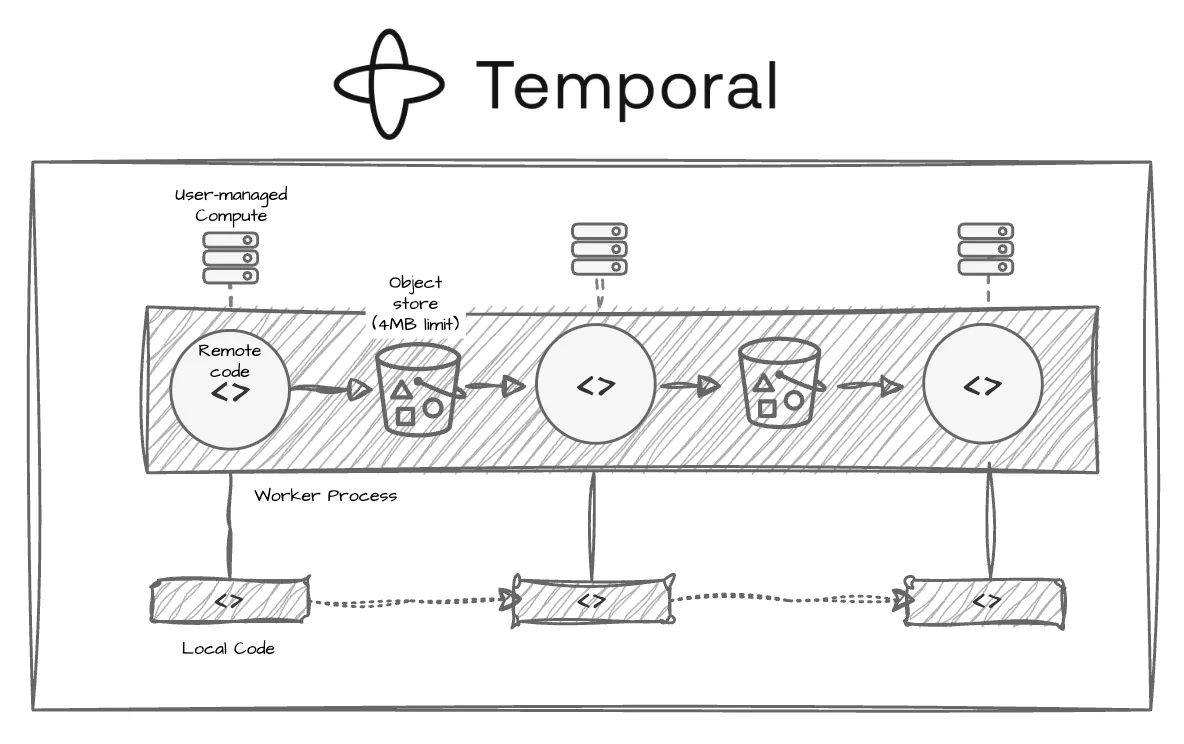
Temporal can’t orchestrate compute

Temporal was designed as a durable microservices orchestrator. But because it can’t orchestrate compute, it can’t solve the 50% of failures caused by compute infra:

  • Replay log. Like Union.ai, when an execution fails, Temporal replays completed events to reconstruct state and picks up from where it left off, without re-running work that already succeeded.
  • No diagnosis. While Temporal can detect infra-caused failures, it isn’t able to clarify the cause of these failures. It leaves diagnosis to the user.
  • Can’t provision resources. Without infrastructure-awareness, Temporal cannot fix these failures by re-provisioning compute resources.

If you’re running simple microservices, these compromises can be totally fine. But if you’re running AI or agentic projects, you’ll need an AI runtime.
Union.ai vs. Temporal
Infrastructure-aware failure recovery
Can detect that a workflow failed due to infrastructure, but cannot diagnose the cause or fix it; OOM errors, node interruptions, and container preemption fall to the user to diagnose and remediate
Classifies infra failures and retries automatically with configurable backoff
Same plus typed exception handling; catch OOM and retry with more memory; catch spot preemption and resume from checkpoint without rebuilding the workflow
Durable execution and replay
Limited
Replays completed events to reconstruct state; picks up from the last successful activity without re-running completed work
Caches task outputs; re-executions skip completed tasks automatically
Same task-level caching plus infrastructure failure handling; durable execution extends to compute-caused failures, not just logic failures
Per-task compute provisioning
Workers are user-managed processes; Temporal has no concept of compute resources, GPU types, or infrastructure; workloads share whatever environment the worker runs in
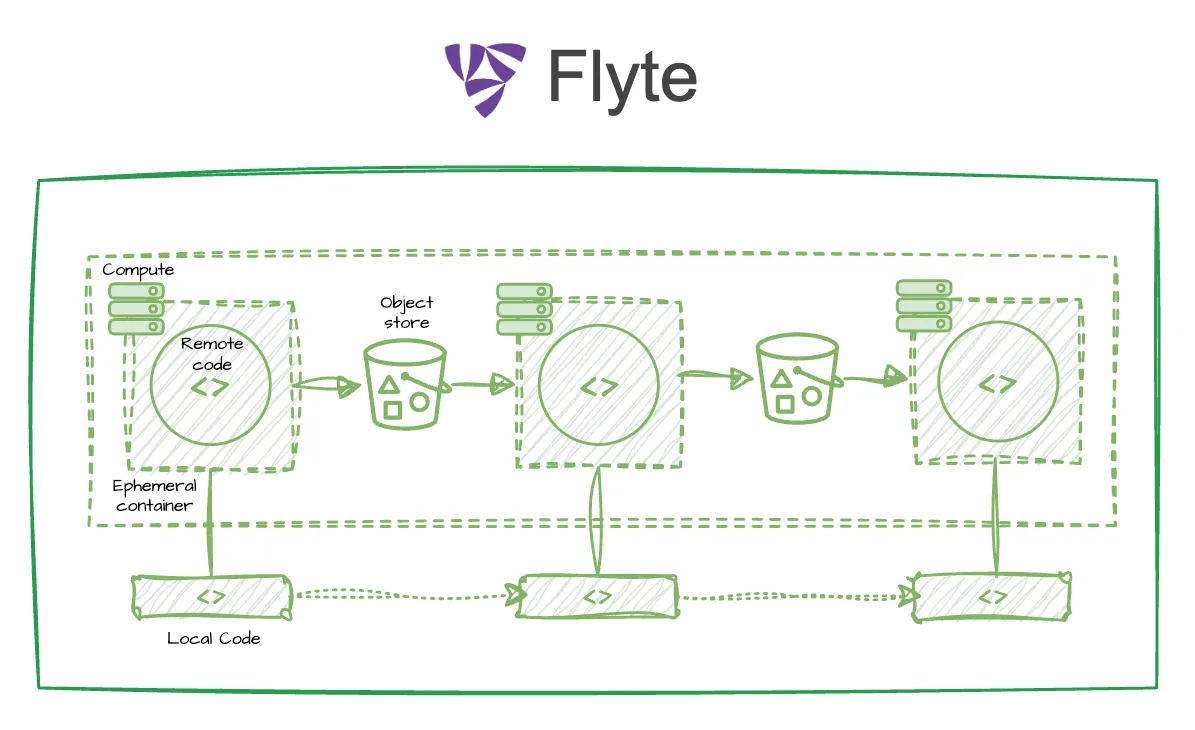
Each task declares its own compute requirements; Kubernetes provisions the right resources per task
Same plus task-level routing across clusters; one workflow can preprocess on CPU spot, train on H100s, and validate on cheaper GPUs without manual coordination
Dynamic workflows at runtime
Workflows can make decisions and schedule activities dynamically at runtime; a core feature of the platform
Pure Python control flow; tasks branch and adapt based on intermediate results
Same plus runtime resource overrides; tasks can request different hardware mid-workflow based on what intermediate results require
Python-native authoring
Partial
SDKs available in Python and other languages, but the activity/workflow model requires Temporal-specific patterns; not pure Python
Pure Python with decorators; workflows are real Python functions with loops, conditionals, and normal async control flow
Same Python model; no rewriting needed to move from Flyte OSS to Union.ai
AI/ML workload support
General-purpose workflow engine; no native support for GPU workloads, ML training jobs, distributed training frameworks, or model serving
Purpose-built for AI/ML; native plugins for Spark, Ray, PyTorch, and distributed training
Same plus end-to-end AI lifecycle in one platform: orchestration, training, fine-tuning, and inference serving
Data lineage and artifact tracking
Tracks workflow state and event history, not data provenance; no native lineage across runs or artifact versioning
Partial
Typed inputs and outputs are tracked per task, lineage is limited to execution metadata and user conventions
Full cross-run provenance graph queryable through UI and SDK; artifacts are typed, versioned, and lineage-linked; when a dataset is bad, immediately identify every downstream model and artifact affected
Task fanout / parallelism
Limited
Supports parallel activities but not designed for high-cardinality ML fan-out; large parallel workloads require external coordination
~10K tasks
Bounded by Kubernetes control-plane scheduling throughput
250K+ tasks
Purpose-built execution substrate bypasses the K8s pod-scheduler bottleneck that caps Flyte OSS at high cardinality
Observability
Partial
Workflow state and event history visible in UI; no compute metrics since Temporal does not manage infrastructure
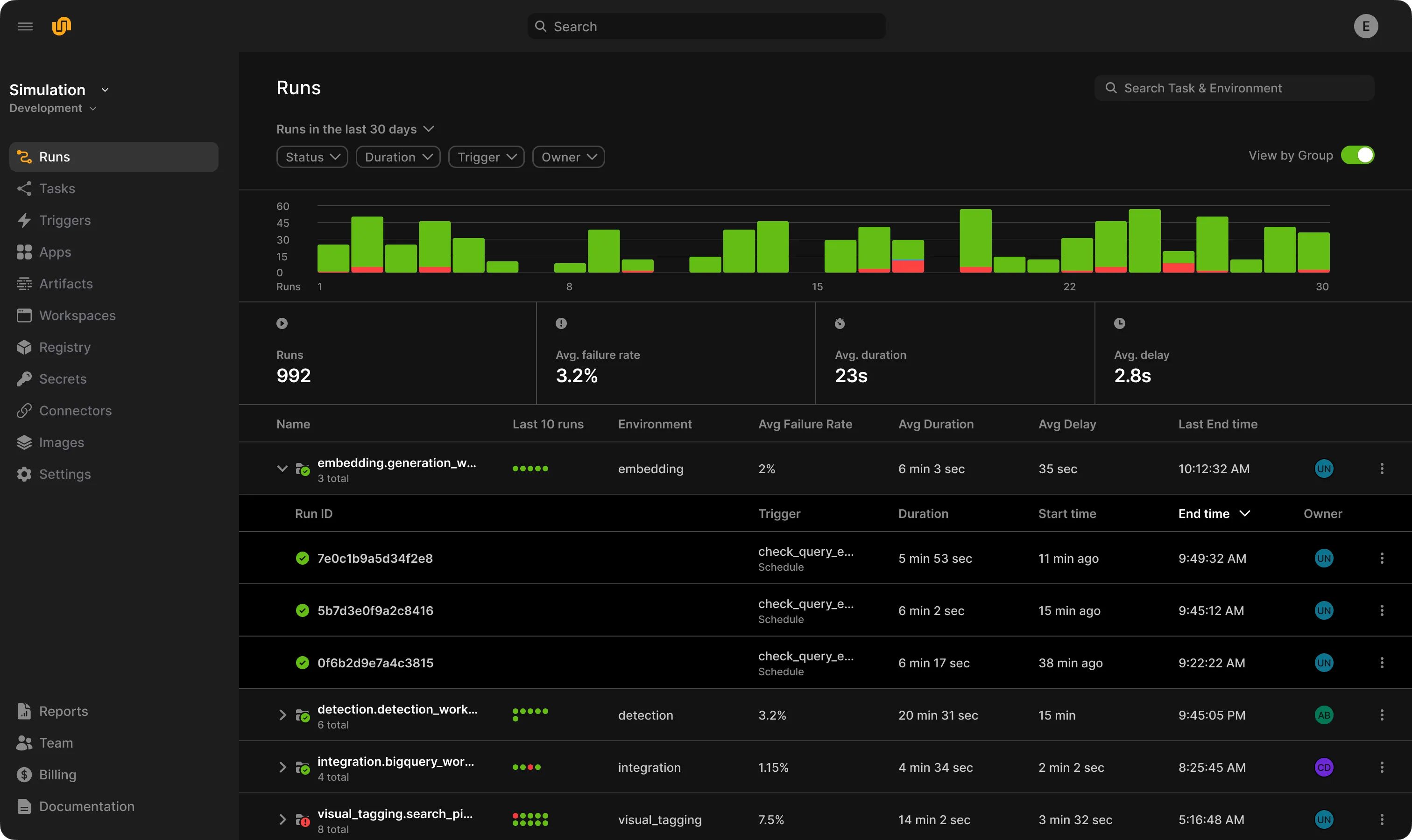
Unified execution UI with task state, logs, and inputs/outputs
Same plus per-task CPU, GPU, and memory profiling; persisted logs queryable after pod termination; cost attribution by workflow, project, and team

Union.ai orchestrates logic and compute infra

Union.ai, the enterprise Flyte platform, is expressly designed for AI engineers. Using its infrastructure-awareness, teams can build workflows that are:

  • Compute-aware, autonomously solving both logic and infra-caused failures like OOM errors
  • Self-healing, so pipelines that fail autonomously recover and continue
  • Dynamic, so your AI systems and agents can make decisions on the fly at runtime
  • Authored in pure Python, so you can easily go from local dev to production in your cloud
  • Scalable and efficient, handling large task fanout and parallelism with ease
Union.ai is built for production

The platform deploys to your secure cloud

  • Enhanced scale and performance, with significantly improved actions/run, concurrency, and task startup time
  • End-to-end AI lifecycle support, including orchestration, training and fine-tuning, and inference
  • Developer-loved UI, for faster, easier development cycles
  • Observability, including for data lineage, resource usage, failure logs, etc.
  • Portability to open-source, for teams looking to avoid lock-in

Teams report that Union.ai accelerates them from prototype to production, cutting iteration cycle time in half

The Union.ai team offers high-touch support to ensure users are successful.
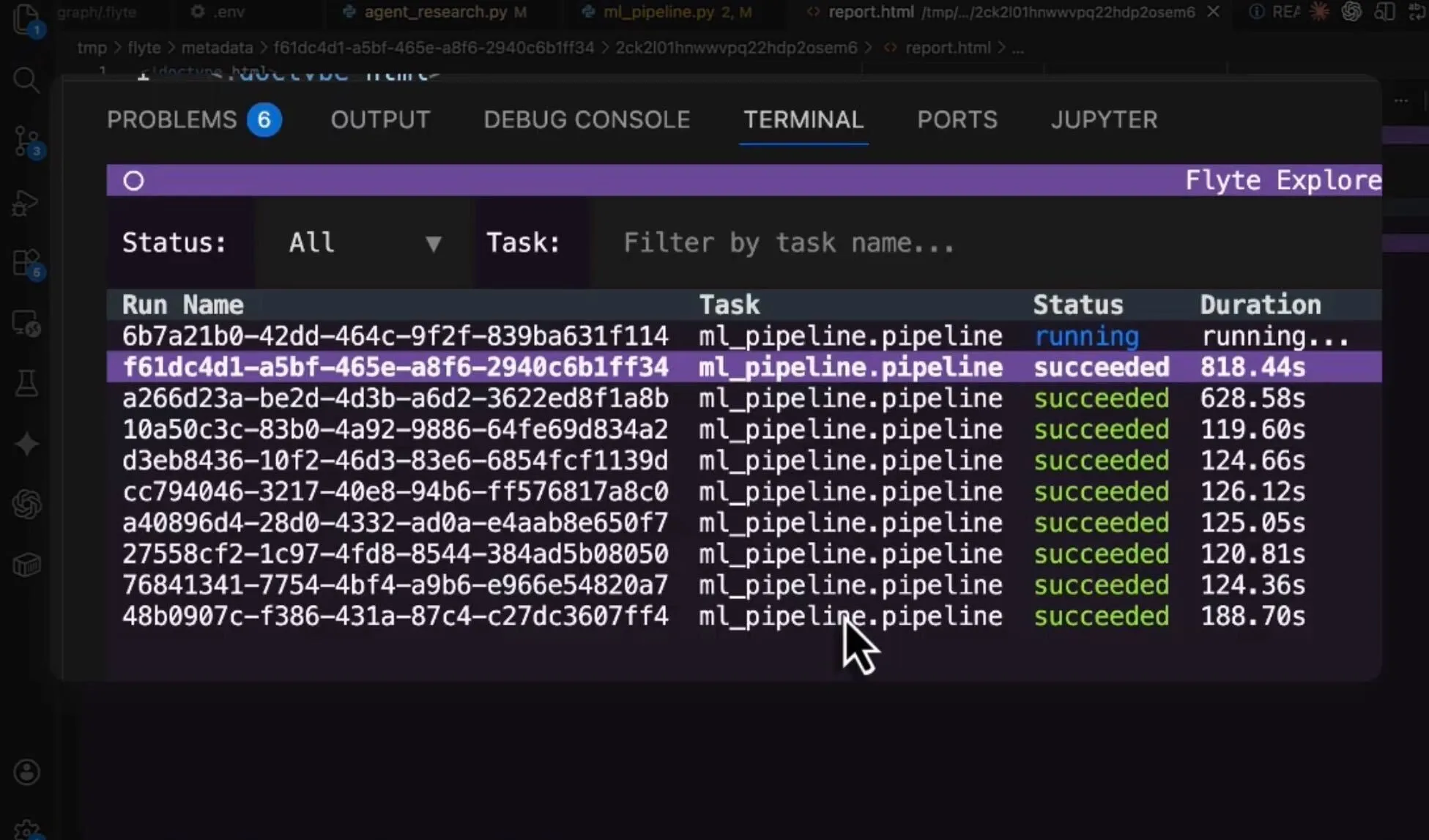
Flyte 2 OSS: Open-source AI runtime

Flyte 2 OSS is the most powerful open-source AI runtime, bringing Flyte’s core data model, scalability, and reliability to DIY teams. While it lacks some enterprise capabilities of Union.ai, it remains the most capable open-source AI runtime available. It’s trusted by teams worldwide with 80M+ downloads and growing.
Trusted by 4,000+ companies

Accelerate engineers with tools to make their lives easier.

Let’s chat

What’s a quick chat compared to the hours a week you could save on maintaining infrastructure?